

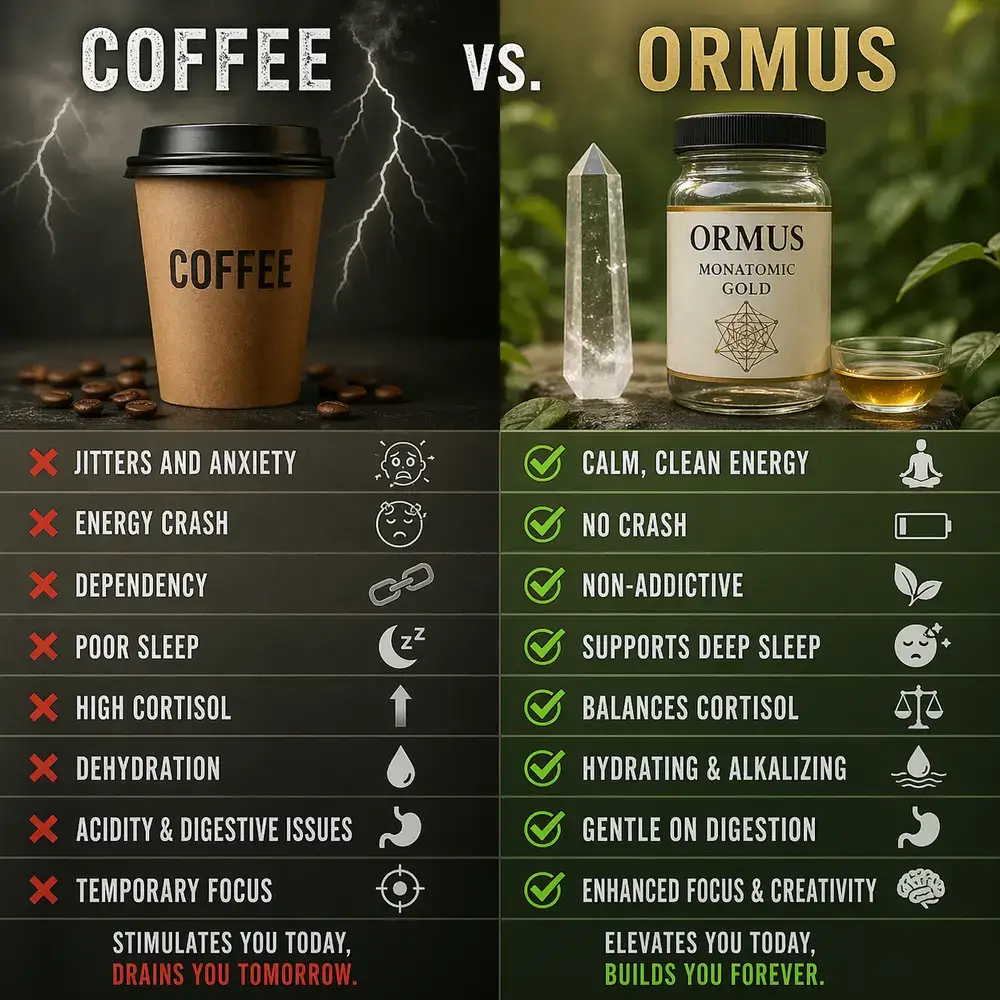
A natural alternative to stimulants without jitters, addiction, and withdrawal
The modern pace of life dictates constant productivity, speed, and concentration. Many people start their day with coffee — and continue to fuel themselves with caffeine throughout the day.
Coffee has become not just a drink, but a part of culture: morning rituals, meetings, work processes.
But behind this habit is often an addiction to stimulation. A person no longer chooses coffee so much as feels a need for it to stay energized, focused, and "on the go."
Caffeine problems
Despite the quick effect of cheerfulness, regular caffeine consumption has a downside:
- Nervousness and anxiety.
Caffeine stimulates the nervous system, which can cause internal tension, irritability, and even panic attacks. - Sleep disturbances.
Even if it seems like the body is “used to it,” caffeine affects the depth and quality of sleep, leading to chronic fatigue. - Dependence.
Regular consumption forms a habit: without coffee, energy decreases, drowsiness and "fog" appear in the head. - Tolerance.
Over time, the body adapts — and more and more caffeine is needed to achieve the same effect. - Energy "swings".
After a peak of vigor, there is often a decline - even greater fatigue than before.
Ormus as an alternative
Ormus is a natural substance that many people consider a mild alternative to caffeine.
Unlike coffee, Ormus does not stimulate the nervous system abruptly, but works more delicately:
- Even energy without peaks and troughs.
Instead of a short-term "boost," there is a stable feeling of resourcefulness throughout the day. - Clarity and concentration.
Focus without internal tension and overload. - No addiction.
There is no “need more” effect, as is often the case with caffeine. - Maintaining general condition.
Many users report improved well-being, calmness, and inner balance.
Coffee gives a quick boost, but often takes away more energy in the long run.
Ormus is an approach through balance, not through stimulation.
How caffeine works: mechanism and drawbacks
Mechanism of action
Caffeine affects the body by stimulating the nervous system.
The main mechanism is - adenosine blocking — a neurotransmitter responsible for the feeling of fatigue.
When adenosine is blocked, the brain does not receive the signal "it needs to rest," and the person feels a surge of vigor.
In parallel, caffeine:
- increases the level cortisol (stress hormone).
- stimulates production adrenaline.
- activates fight or run mode.
Short-term effects of caffeine
Immediately after consuming caffeine, a person experiences:
- energy surge
- improved concentration
- increased alertness
- temporary reduction in fatigue
It is because of these effects that coffee has become so popular in everyday life.
Long-term problems with caffeine use
Regular use of caffeine can have a number of cumulative effects:
- Addiction and tolerance.
The body adapts to caffeine, and larger doses are needed to achieve the same effect. - Anxiety and nervousness.
Constant stimulation of the nervous system can cause internal tension, irritability, and even panic attacks. - Sleep disturbances.
Caffeine affects the quality of deep sleep, even if a person falls asleep without problems. - Depletion of the body's resources.
Constant stimulation through cortisol can lead to feelings of chronic fatigue and "burnout." - Energy "rollback".
After a peak in activity, there is often a sharp drop in energy. - Effects on digestion and water balance.
Caffeine can irritate the stomach and contribute to mild dehydration.
How Ormus Works: A Balanced Approach
Ormus is not a classic stimulant. Its effects are described by users as milder and more cumulative.
- Proposed mechanism of action.
Ormus is often described as a substance that works not through stimulation, but through optimization of the body's internal processes. - Cellular energy and mitochondria.
It is believed that Ormus can support the efficiency of cellular processes, which affects overall energy levels. - Nervous system.
Users report a feeling of greater clarity and speed of information processing without overload. - Balance of brain function.
Ormus promotes improved and more harmonious interaction between different cognitive processes (logic, intuition, creativity). - Cognitive and conscious states.
Some users describe improvements in concentration, perception, and inner clarity. - Anti-stress effect.
Unlike caffeine, Ormus does not stimulate a sharp increase in cortisol, which can contribute to a more calm and stable state. - Maintaining overall balance.
Quite often, a positive effect on well-being and a reduction in stress levels are noted.
Unlike caffeine, Ormus:
- does not give a sharp "rise".
- does not cause a sharp decline.
- does not work due to depletion of the body's resources.
His approach is balance and stability, and not "on loan" stimulation.
Caffeine is a rapid activation due to the body's stress response.
Ormus is an approach that is positioned as supporting internal resources without overloading the nervous system.

Specific benefits of Ormus over caffeine
- Energy without nervousness (calm, steady energy)
- Focus without "fog in the head" (clarity of thinking)
- No energy rollback
- Improving sleep quality (instead of worsening it)
- Mental health support (reducing anxiety)
- Cognitive and spiritual growth
- Adrenal gland restoration
- Antioxidant and anti-aging effect
- Synergy with meditation, sports, and study